Most articles about agentic development are written for engineers. They explain orchestration patterns, IDE integrations, and the difference between an agent and a chatbot. Useful if you write code. Less useful if you sign the checks.
This is the version for the people on the other side of the table: the founder, the managing partner, the dealer principal, the operations lead. The person trying to figure out whether "agentic development" is a real shift worth budgeting for or another piece of vocabulary that will be gone by next year.
The short answer: it is a real shift, and the gap between businesses that understand it and businesses that do not is going to compound fast. Here is the definition that actually matters for you, and what it changes about how software gets built for your company.
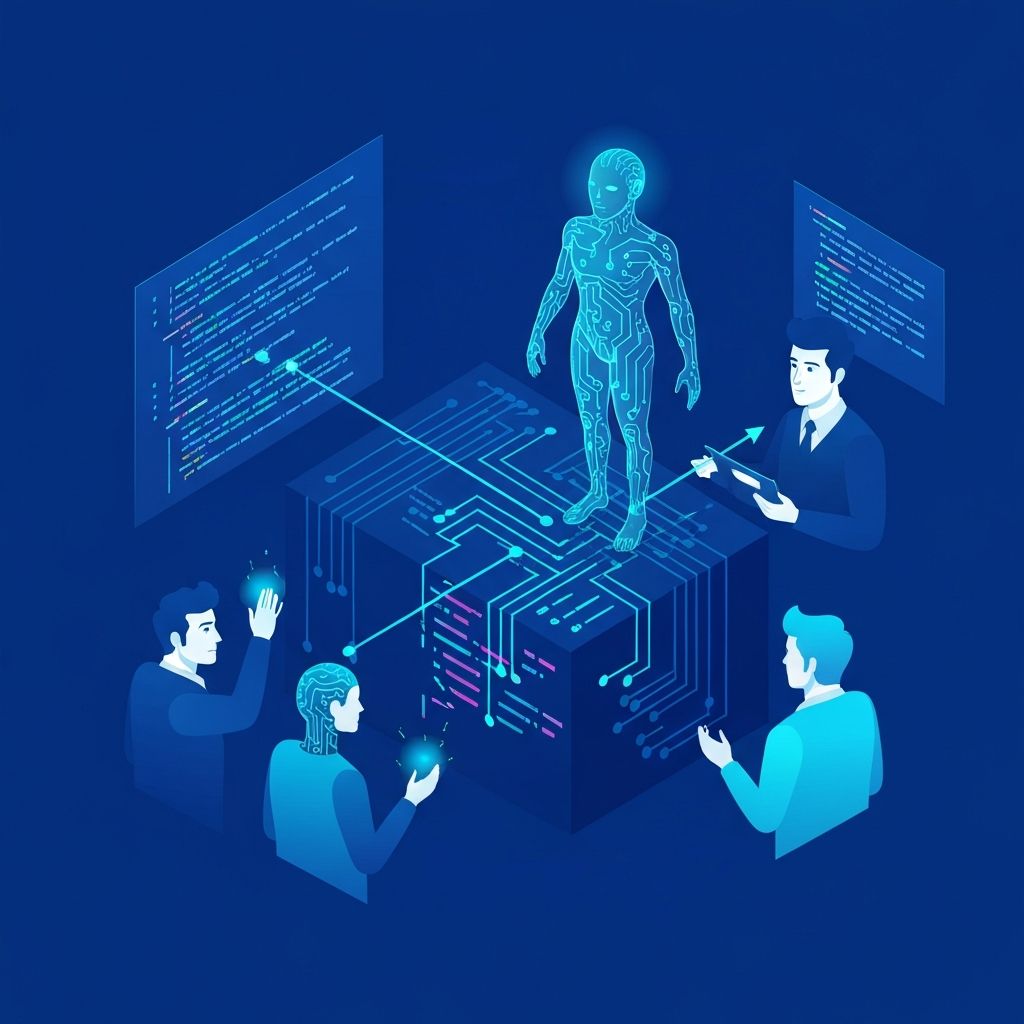
Agentic development is software engineering where AI agents do meaningful work alongside senior engineers
A clean working definition: agentic development is a software delivery model in which AI agents plan, write, test, and refine production code under the direction of senior engineers, compressing the time and cost required to build custom software.
That is the practical version. The academic version talks about autonomous reasoning loops and multi-step tool use. Both are true. The practical version is the one you can act on.
Three things are doing the work in that definition. First, AI agents are not just autocomplete. Modern agents can take an objective ("integrate this DMS with our payout dashboard"), break it into steps, execute those steps, check the results, and revise. That is qualitatively different from the AI coding tools of 2022. According to Forrester's 2026 analysis, agentic software development tools "plan, generate, modify, test, and explain software artifacts across multiple stages of the software development lifecycle." That sequence of verbs is what makes it agentic.
Second, the agents are not running unsupervised. Senior engineers set the architecture, the constraints, and the acceptance criteria. They review what the agents produce. They make the hard judgment calls. The agents handle the volume; the engineers handle the direction. Anyone selling you "fully autonomous AI software development" with no human in the loop is either confused or selling a demo, not a system.
Third, the result is custom software you actually own. Not a SaaS subscription, not a plugin, not a configuration file inside someone else's platform. Working software that fits your operation.
The economic argument is what makes this worth your attention
If agentic development were just a faster way for engineers to feel happy, it would not matter at the business level. It matters because the unit economics of building custom software have changed.
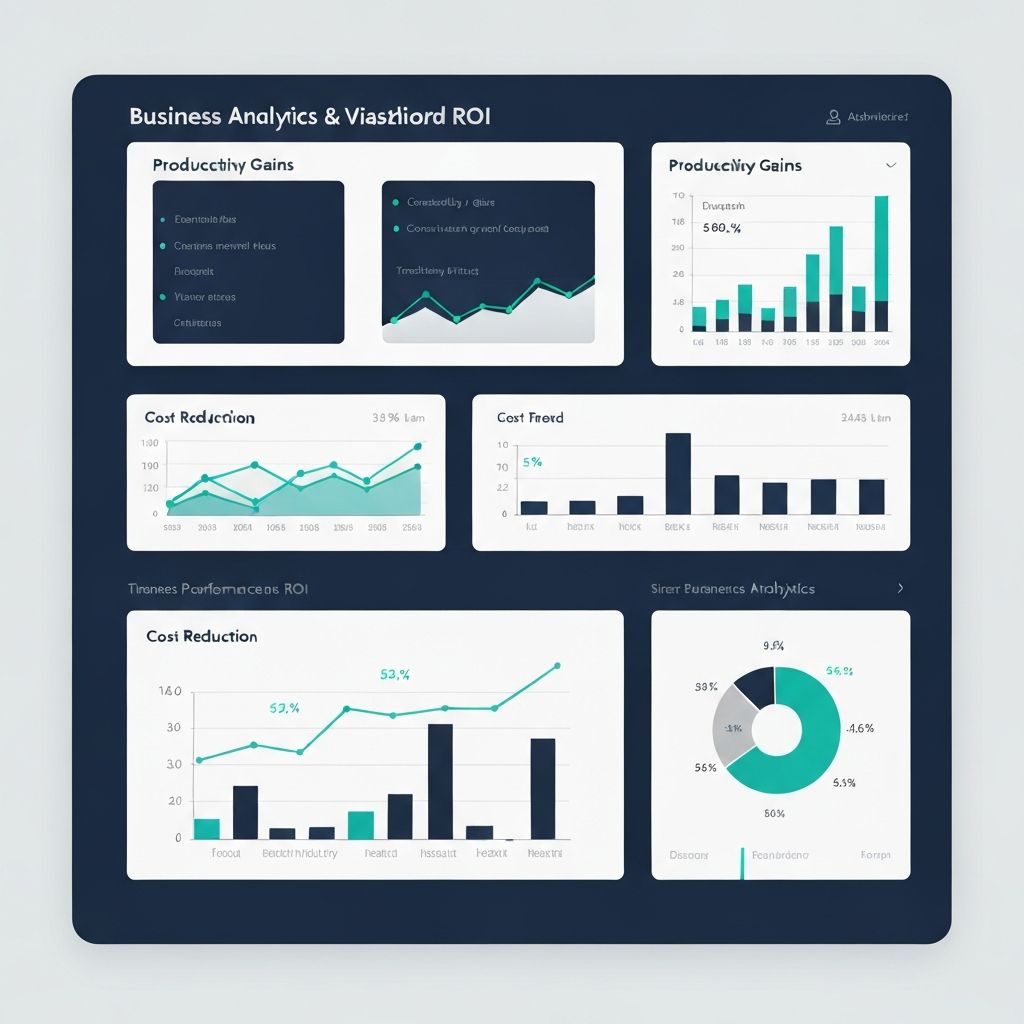
McKinsey's analysis of nearly 300 publicly traded companies found that the top quintile of organizations using AI in software development are seeing 16 to 30 percent improvements in productivity, time to market, and customer experience, along with 31 to 45 percent gains in software quality. Those are not pilot-project numbers. Those are sustained gains in shipping software.
What does that mean in practical terms for a business that is not in the software industry? Two things.
The first is that custom software is no longer the expensive option. For a long time, the calculus was: SaaS is cheap and immediate; custom is expensive and slow; pick SaaS unless you have very specific requirements. Agentic development collapses the second half of that equation. Custom software is still more involved than buying a subscription, but the gap is much smaller than it used to be, and you end up owning the result.
The second is that the cost of not automating something has gone up. When building a custom tool used to take six months and a six-figure check, "we will just keep doing it in Excel" was a reasonable answer for a lot of workflows. With weekly delivery and agentic productivity gains, the math on that decision is different. The bottlenecks you have been working around for years are now cheap enough to fix.
Agentic development is not the same thing as "using AI tools"
This distinction matters because most companies that say they are using AI in software development are not actually doing agentic development. They are doing what McKinsey calls Level 2: developers writing code, with an AI tool suggesting the next few lines.
Level 2 is useful. It is not transformative. According to McKinsey's framing, most companies are stuck at Level 2, where AI is "speeding up individual tasks" rather than running workflows.
Agentic development sits at Level 3 and Level 4. Level 3 is where an engineer describes a feature in plain language and the agent produces the first version of the code, the tests, and the documentation. Level 4 is where a small team directs a coordinated system of agents to deliver entire applications end to end.
The reason this matters for a business leader: when you hire a vendor, an agency, or an internal team to build something, you are buying a delivery model, not a marketing claim. Plenty of firms now describe themselves as "AI-powered." Most of them are Level 2 shops. That is a meaningful productivity gain over 2019, but it is not the order-of-magnitude shift that makes custom software financially competitive with SaaS for the first time in a decade.
When evaluating a partner, the question to ask is not "do you use AI." It is "what does your delivery process look like, and where are the agents in it." You are looking for specifics: what gets agent-generated, what gets human-reviewed, what the iteration loop looks like, how often you see working software.
The hype is real, and so is the floor under it
It is fair to be skeptical here. Every wave of enterprise technology has been over-promised. Agentic AI is currently no exception. Gartner placed AI agent development platforms at the Peak of Inflated Expectations in its April 2026 Hype Cycle for Agentic AI, with a two-to-five-year timeline to mainstream adoption and "agent-washing" explicitly named as a market problem.
That should temper your expectations on vendor claims. It should not change the underlying conclusion. Two things are true at once: a lot of products marketed as agentic are still half-built, and the actual capability of AI agents to write production code under senior engineering supervision has crossed a real threshold.
The floor under the hype is concrete. Pull-request turnaround time on teams using AI coding tools has dropped from 9.6 days to 2.4 days, a 75 percent reduction. Eighty-five percent of professional developers now use AI tools regularly, according to JetBrains' 2025 Developer Ecosystem Survey. These are not aspirational numbers from a deck. They are how the work is happening right now.
If you wait for the hype to fully deflate before you act, you will be acting from behind. The companies that figure out how to use agentic development for their specific operation in the next 12 to 18 months will have built durable advantages by the time the broader market catches up.
If you are trying to figure out what this means for your own operation, that is exactly the conversation our weekly delivery model is built around. Schedule a 30-minute call and we can walk through where agentic development fits in your specific business.

What changes for your business when software gets built this way
The technical definition is one thing. The practical effects on a buying business are another. Here is what actually shifts.
Delivery speed compresses from quarters to weeks
A traditional custom-software engagement might show you a working demo in month three or four. With agentic development and a weekly delivery cadence, you see working software at the end of week one. Not a mockup. Not a wireframe. Software running in a staging environment that does some piece of what you asked for. The pace continues from there. You get to redirect the work every seven days based on what you actually see, instead of crossing your fingers and waiting six months for a reveal.
The scope of what is affordable expands
Workflows you previously decided were "not worth automating" become worth automating. The dealership that ran warranty submissions manually because building a custom system was a six-figure quote can now build one for a fraction of that cost. The personal injury firm that lived inside Filevine because building a custom intake layer was prohibitive can now have one running on top of Filevine in weeks. The HVAC company that handled dispatch in spreadsheets because ServiceTitan was the only "real" option can now have software shaped exactly around how they actually operate.
The economics of build-versus-buy change
SaaS was the default answer for SMB and mid-market companies for a decade because the alternative was too expensive. That default is now negotiable. Custom software is no longer the option that only enterprises can afford. The right answer is still situational, but the situation has changed.
Your team owns the result
When the engagement is over, you have working software, full documentation, and source code that belongs to you. No vendor lock-in. No per-seat tax that grows with your headcount. No quarterly negotiations with a SaaS account manager about which features are in your tier. The advantage is yours to keep.
The unit of progress becomes the working demo, not the status report
This is the cultural shift that takes longest to get used to. Traditional consulting engagements communicate through documents: requirements docs, design docs, project plans, status updates. Agentic development engagements communicate through working software. Every week, something runs. That changes how you evaluate whether the project is on track. The artifact you look at is the software, not the deck.
How to think about agentic development for your operation in 2026
If you take one thing from this post, take this: agentic development is not a technology to adopt. It is a delivery model to evaluate.
You are not going to install agentic AI inside your business and have software start writing itself. The shift happens at the point where you commission software to get built. The question is what kind of partner builds it, on what cadence, with what model behind the work.
Three practical things to do this year:
- Audit the bottlenecks. The workflows that have annoyed you for years but were never quite painful enough to justify a custom-software budget are now in scope. Make a list. Even a short one.
- Evaluate partners by their delivery model, not their marketing. Ask how often you will see working software. Ask what gets done by agents and what gets done by senior engineers. Ask what you will own at the end. Ask how they handle a request to change direction in week four. The answers will tell you whether you are looking at a Level 2 shop with new marketing or a real agentic-development team.
- Start with one workflow, not ten. The companies that get the most out of agentic development are not the ones that try to remake everything at once. They are the ones that pick a single high-leverage bottleneck, build the right tool for it under a weekly cadence, and let the result earn its own follow-up.
That is the conversation worth having now. If you have a bottleneck you have been working around for too long, or an AI initiative that has not produced anything yet, we run weekly engagements under a predictable monthly retainer that are built for exactly that. Schedule a 30-minute call and let's talk through where it fits.